
A steel fabrication workshop in Pakistan is a facility where raw steel is cut, shaped, welded, and finished into structures, frames, tanks, gates, platforms, and custom industrial components. The quality of the finished product depends on the workshop’s welding stations, cutting accuracy, working environment, and inspection discipline, not just on the drawing. This guide explains what a professionally equipped workshop looks like and what to check before you award a project.
What Is a Steel Fabrication Workshop?
A steel fabrication workshop turns steel sections, plates, pipes, and sheets into finished assemblies. The work follows a clear sequence: material preparation, cutting, shaping, fitting, welding, finishing, inspection, and dispatch.
Two workshops can receive the same drawing and deliver very different results. The difference lies in machinery setup, operator skill, and process control. For contractors, factory owners, and developers in Karachi and across Pakistan, understanding this difference protects both budget and schedule.
What Equipment Does a Professional Steel Fabrication Workshop in Pakistan Need?
A well-equipped workshop combines welding, cutting, shaping, lifting, and finishing capability under one organised roof. Machine count matters less than whether the setup fits the work being done.
Advanced Welding Stations (MIG, TIG, Stick)
Welding stations are where structural strength is decided. A capable workshop typically covers:
- MIG/MAG welding for fast, consistent production welds on structural and general fabrication
- TIG welding for precision work, thin sections, and stainless steel
- Stick (SMAW) welding for heavy structural joints and site-compatible work
Look beyond the machines. Good stations have dedicated bays, clamps and fixtures that hold parts aligned, and a stable power supply, since voltage fluctuation affects arc stability. Ask who the welders are and how their skills are verified.
Cutting and Shaping Units
Errors made at the cutting stage carry through every later step. A properly organised metal cutting setup usually includes:
- Plasma or oxy-fuel cutting for plate and heavier sections
- Shearing and band-saw cutting for sheet, flats, and profiles
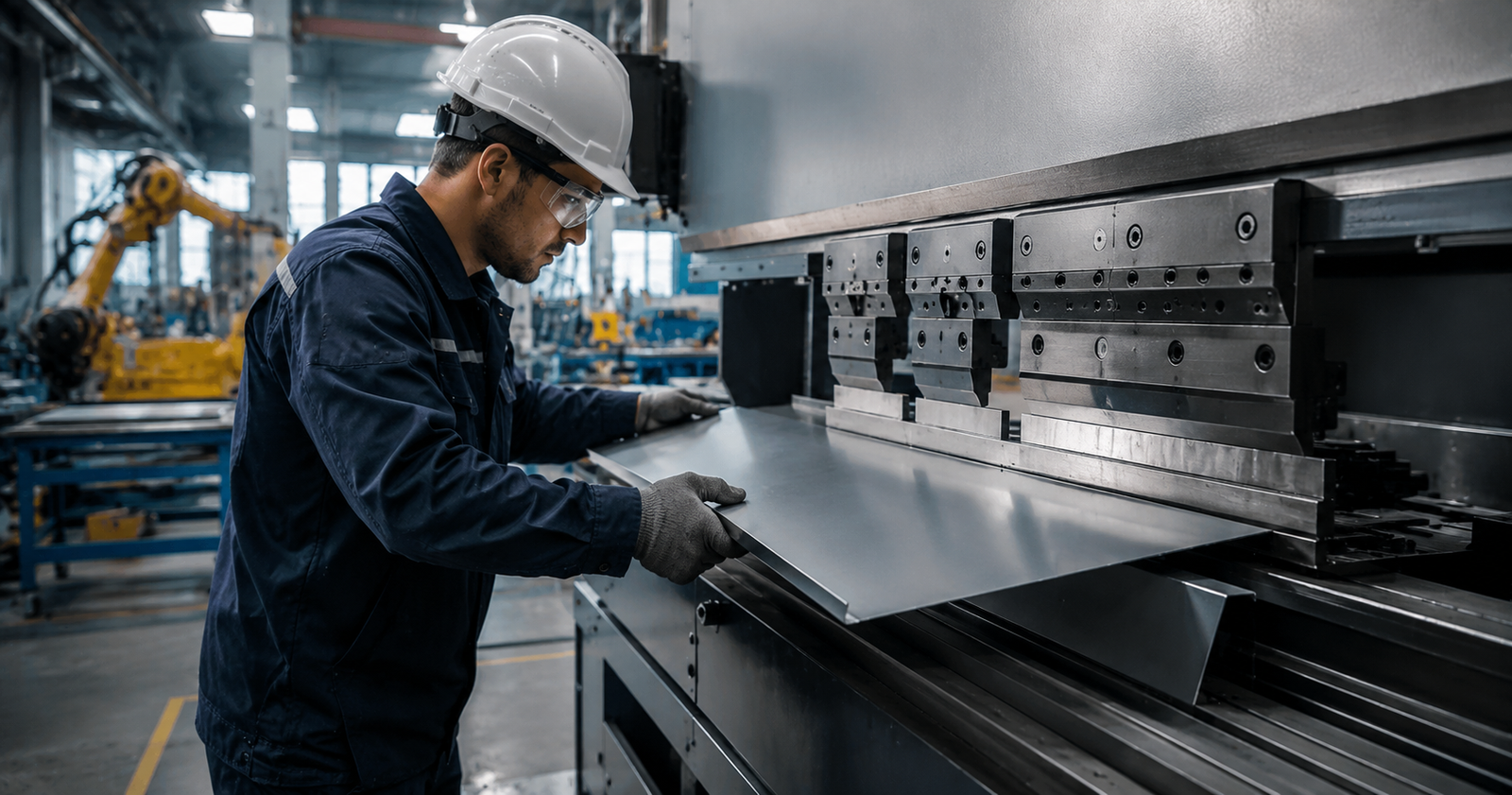
- Press brake bending and rolling for formed sections, tanks, and cylindrical parts
- Drilling and punching equipment for accurate hole placement
The practical question to ask is how the workshop holds tolerance across a repeat batch, and how parts are marked, checked, and tagged.
At BG Engineering and Fabrication, laser cutting handles up to 8mm carbon steel and 5mm stainless steel, which gives cleaner edges on decorative and architectural parts. Heavier plate and structural sections are typically cut using other methods such as plasma or sawing.
Industrial Tooling, Jigs, and Lifting Infrastructure
The less visible layer of a fabrication facility determines speed, safety, and accuracy:
- Overhead cranes, hoists, or other lifting equipment for heavy assemblies
- Fitting tables and jigs for square, flat assembly
- Calibrated measuring tools such as levels, calipers, tapes, and gauges
- Grinding and finishing tools for weld cleanup and surface preparation
A workshop that handles lifting and measuring carefully will usually handle tolerances carefully too.
Why Does a Controlled Fabrication Environment Matter in Karachi’s Climate?
A controlled workshop protects steel and welding consumables from moisture, dirt, and damage. This matters especially in coastal, humid cities like Karachi, where corrosion begins early on exposed steel and damp electrodes or wire can cause weld defects.
Signs of a well-controlled facility:
- Covered, organised storage with steel separated by grade and size
- Dry storage for welding consumables
- A clear material flow from storage to cutting, fitting, welding, and finishing
- Basic safety practice: ventilation or fume extraction, guarding, PPE use, and clear walkways
Housekeeping is a quality signal. A tidy workshop with defined work zones generally produces more consistent work than a crowded one.
Which Welding Standards Should a Fabricator Follow?
Ask the fabricator which welding code applies to your project and how welders are qualified against it. For structural steel, AWS D1.1 is a commonly referenced standard. For pressure vessels and certain tank work, ASME Section IX is commonly referenced. The right standard depends on your project’s specification and client requirements.
Request evidence such as welder qualification records or a written welding procedure, instead of relying on a verbal assurance. If your project has a defined specification, share it at the enquiry stage so the fabricator can confirm suitability.
How Do You Check Weld and Dimensional Quality Before Dispatch?
Reliable workshops inspect before the product leaves the floor. Typical checks include:
- Material check against the specified grade and size
- Dimensional check of lengths, squareness, flatness, and hole positions against the drawing
- Visual weld inspection for uniform bead, proper fusion, and absence of cracks, undercut, or excess spatter
- Fit-up check for assemblies that must join on site
- Further testing where the specification requires it, arranged according to the project’s requirements
Ask what inspection records are provided and whether you can witness inspection before dispatch.
What Happens After Welding? Surface Preparation and Corrosion Protection
Fabrication does not end at the last weld. Surface preparation and coating largely decide how long steel lasts in Pakistan’s coastal humidity, dust, and heat.
Typical finishing steps:
- Grinding and cleaning of weld spatter and sharp edges
- Surface preparation such as blasting or mechanical cleaning
- Primer and paint systems, or powder coating where suitable
- Galvanising through an external partner where the project demands it
- Final inspection and protected packing or loading
Confirm the coating system in writing, especially for outdoor or coastal installations.
How Does On-Site Installation Work After Fabrication?
Fabrication does not end at the workshop gate. Accurate fit-up, transport planning, and a clear installation sequence prevent delays on site. Agree on the delivery method, lifting arrangements, and installation sequence before fabrication begins, so that every assembly arrives marked, protected, and ready to install.
Which Projects Suit a Fabrication Workshop?
Different projects stress different parts of the facility:
- Industrial sheds and structural frames: Rely on accurate cutting, strong welding, and lifting capacity.
- Tanks, hoppers, and ducting: Rely on rolling, bending, and leak-free weld quality.
- Architectural steel: Such as main gates for homes and villas, separator panels and screens, and rooftop railings and pergolas relies on neat welds and high-quality finishing.
- Structural frameworks for: Need precise steel fabrication workshop and careful fit-up with glass.
- Machinery frames and skids: Rely on precise drilling, flatness, and fit-up.
Matching the project to the workshop’s strengths avoids delays and rework.
What Should You Ask a Fabricator Before Hiring?
| Question | Why it matters |
| Can I visit the workshop or see current work? | Shows real capability rather than claims |
| Which welding processes and codes do you follow? | Confirms fit for structural or pressure work |
| How are welders qualified? | Welder skill directly affects joint quality |
| How do you inspect welds and dimensions? | Reveals quality control maturity |
| How do you protect steel from rust during storage and dispatch? | Critical in humid and coastal areas |
| Can you handle one-off and repeat orders? | Indicates fixture and process discipline |
| What drawings or specifications do you need from me? | A good fabricator clarifies scope early |
What Affects Steel Fabrication Cost in Pakistan?
Fabrication cost depends on the project, so reliable quotations are always based on drawings. The main factors are:
- Steel grade, section sizes, and total weight
- Design complexity and number of joints
- Welding process and labour time
- Cutting, bending, and rolling operations required
- Finishing and coating system
- Transport, installation, and project timeline
Steel and consumable prices change frequently, so compare quotations on the same scope, material specification, and finish rather than on a single headline rate.
Work With BG Engineering and Fabrication
BG Engineering and Fabrication provides steel fabrication services in Karachi for industrial, commercial, and residential requirements. Explore the BG Engineering and Fabrication for services, read the FAQs for common questions, or browse the blog for technical guides. To check fit for your project, send your drawings or specification and ask about welding process, cutting method, inspection steps, and finishing. A clear technical conversation before quotation is the best predictor of a smooth project.