
Industrial Metal Fabrication Uses Complete Guide for Modern Industry
Industrial Steel Fabrication Solutions is a complete engineering-driven process where raw steel is transformed into strong, precise, and long-lasting structures used in industries, warehouses, factories, and large infrastructure projects. This process is not only about cutting and welding metal, but it is a detailed system of planning, design engineering, material selection, fabrication execution, safety control, quality inspection, and final installation. In modern construction, every strong structure depends on how well the fabrication process is managed from start to finish. That is why stages like steel fabrication project costing, fabrication material selection, industrial welding standards, and structural steel safety compliance are extremely important in achieving reliable results. Each step works together like a chain, where one weak link can affect the entire project performance.
As the industry continues to grow, demand for efficiency, durability, and cost control has increased. This is where proper fabrication project timelines, quality inspection in fabrication, steel fabrication certifications, heavy fabrication logistics, and on site installation process become essential parts of the workflow. These elements ensure that every project is delivered with accuracy, safety, and long-term strength. Industrial Steel Fabrication Solutions are therefore not just about building steel structures, but about creating a complete engineered system that supports modern industrial growth with stability, precision, and reliability.
Steel Fabrication Project Costing and Budget Control
Steel fabrication project costing is the foundation of every successful industrial project. It defines the total financial structure of a project including material cost, labor cost, machinery usage, transportation, surface finishing, and installation expenses. Costing is not just calculation—it is a strategic planning tool. In Industrial Steel Fabrication Solutions, proper costing helps engineers and clients understand how design decisions directly affect budget outcomes. For example, increasing structural complexity or using high-grade steel automatically increases cost, while optimized design can reduce unnecessary expenses.
A major part of steel fabrication project costing is material estimation. Engineers carefully calculate steel tonnage, wastage percentage, cutting efficiency, and fabrication yield. Even a small error in estimation can cause budget overruns. Market fluctuation is another key factor. Steel prices change based on global supply chain conditions, fuel costs, and industrial demand. That is why professionals always add contingency margins to maintain financial stability throughout the project lifecycle.
Read the detailed guide: Steel Fabrication Project Costing and Budget Control

Fabrication Material Selection and Engineering Performance

Fabrication material selection plays a critical role in determining the strength, durability, and lifespan of any steel structure. In Industrial Steel Fabrication Solutions, material selection is based on structural requirements, environmental conditions, and long-term performance expectations. Mild steel is commonly used for general structural frameworks due to its affordability and workability. Carbon steel is preferred for heavy-duty applications where load-bearing capacity is essential. Stainless steel is used in corrosive environments such as chemical plants, marine structures, and food industries.
Engineers also consider factors like tensile strength, yield strength, thermal resistance, and weld compatibility before final selection. Wrong material selection can lead to structural fatigue, corrosion damage, or early failure, increasing lifecycle maintenance costs. Material selection is not only technical—it is also strategic. A well-planned choice reduces fabrication time, improves welding efficiency, and ensures long-term stability of the entire structure.
Read the detailed guide: Fabrication Material Selection and Engineering Performance
Industrial Welding Standards and Structural Integrity
Industrial welding standards are essential in ensuring the safety and strength of fabricated steel structures. Welding is the process that joins different steel components into a single structural system, and its quality determines overall performance. In Industrial Steel Fabrication Solutions, welding is performed using different techniques such as MIG welding, TIG welding, and arc welding depending on project requirements. Each method has its own application based on thickness, load requirement, and environmental exposure.
Welding standards ensure that joints are free from defects such as cracks, porosity, incomplete fusion, or weak bonding. These defects may not always be visible but can severely impact structural safety under stress conditions. Modern fabrication industries also use non-destructive testing (NDT) methods such as ultrasonic testing and radiographic inspection. These techniques help detect internal welding defects without damaging the structure.
Read the detailed guide: Industrial Welding Standards and Structural Integrity

Structural Steel Safety Compliance and Risk Management

Structural steel safety compliance ensures that all fabrication activities follow international safety standards and engineering regulations. In Industrial Steel Fabrication Solutions, safety is not an option—it is a mandatory requirement at every stage. Safety compliance includes load-bearing analysis, fire resistance standards, environmental protection guidelines, and worker safety protocols. Every structure must pass strict safety evaluations before approval and installation.
Industrial projects often involve heavy machinery, elevated work platforms, and high-risk environments. Without proper compliance, the chances of accidents, structural failure, or financial loss increase significantly. Safety compliance also includes regular inspections and documentation. Engineers continuously monitor fabrication processes to ensure alignment with approved drawings and standards.
Read the detailed guide: Structural Steel Safety Compliance and Risk Management
Fabrication Project Timelines and Execution Strategy
Fabrication project timelines define the complete schedule of Industrial Steel Fabrication Solutions, from design and material procurement to final installation. Proper timeline planning ensures smooth coordination between engineering teams, fabrication workshops, transportation units, and on-site installation crews. Without a structured timeline, projects often face delays, cost overruns, and resource mismanagement.
Each phase of fabrication has its own duration. Design approval, material cutting, welding, assembly, inspection, and delivery all require precise scheduling. Project managers use Gantt charts and digital tracking systems to maintain progress visibility. Buffer time is always included in professional planning to manage unexpected delays such as material shortages, weather disruptions, or design modifications.
Read the detailed guide: Fabrication Project Timelines and Execution Strategy

Quality Inspection in Fabrication and Assurance Systems

Quality inspection in fabrication ensures that every steel component meets engineering specifications before delivery or installation. It is a critical checkpoint in Industrial Steel Fabrication Solutions. Inspectors evaluate dimensional accuracy, weld quality, surface finishing, alignment, and structural strength. Advanced inspection tools are used to identify hidden defects that are not visible to the naked eye.
Non-destructive testing methods play a major role in quality assurance. These methods help verify internal integrity without damaging the material. Quality inspection ensures that the final structure is safe, durable, and fully compliant with design requirements. It also builds trust between clients and contractors by ensuring transparency and consistency.
Read the detailed guide: Fabrication Project Timelines and Execution Strategy
Heavy Fabrication Logistics and Transportation Planning
Heavy fabrication logistics involves the safe transportation of large steel components from fabrication workshops to construction sites. This is a highly critical phase in Industrial Steel Fabrication Solutions. It includes route planning, load balancing, lifting operations, and coordination with transport authorities. Special equipment such as cranes, trailers, and hydraulic lifters are used to handle heavy structures.
Improper logistics planning can lead to delays, structural damage, or increased project costs. That is why experienced teams carefully design logistics strategies before dispatch. Storage planning at the site is also part of logistics. Proper placement of steel components ensures smooth installation workflow without delays.
Read the detailed guide: Heavy Fabrication Logistics and Transportation Planning

On Site Installation Process and Final Assembly

On site installation process is the final and most visible stage of Industrial Steel Fabrication Solutions. It involves assembling all fabricated steel components at the project location. Engineers follow detailed installation drawings to ensure proper alignment, positioning, and structural balance. Heavy cranes and lifting equipment are used to place components accurately.
Installation requires coordination between multiple teams including engineers, welders, and safety supervisors. Each connection is checked for accuracy before final tightening. A successful installation reflects the quality of all previous stages including design, fabrication, and logistics.
Read the detailed guide: On Site Installation Process and Final Assembly
Custom Structural Steel Fabrication Solutions

Custom Structural Steel Fabrication Solutions are designed to meet specific industrial and commercial project requirements with high precision and flexibility. Unlike standard steel production, custom fabrication focuses on creating tailored structural components according to project dimensions, load requirements, and architectural designs. This process helps industries achieve stronger, more efficient, and space-optimized structures for warehouses, factories, industrial plants, and commercial developments.
Custom fabrication also improves project efficiency because every steel component is engineered for a specific purpose. Skilled engineers and fabricators work together to ensure proper fabrication material selection, industrial welding standards, and structural steel safety compliance throughout the project. Advanced machinery and digital design systems further improve accuracy and reduce production errors during fabrication.
Another important advantage of custom structural steel fabrication is long-term durability. Properly fabricated custom steel structures can handle heavy operational loads, environmental stress, and continuous industrial usage without compromising structural integrity. With proper quality inspection in fabrication and certified manufacturing processes, custom steel fabrication solutions provide reliable and cost-effective results for modern industrial construction projects.
Role of Automation in Industrial Steel Fabrication

Automation is rapidly changing the industrial steel fabrication industry by improving speed, precision, and production efficiency. Modern fabrication facilities now use automated cutting machines, robotic welding systems, CNC equipment, and digital measuring tools to achieve highly accurate results with minimal human error. These advanced systems help fabricators handle complex structural designs while maintaining consistent quality throughout the production process.
One of the biggest advantages of automation in Industrial Steel Fabrication Solutions is faster project completion. Automated systems reduce manual workload and improve fabrication project timelines by increasing production speed without compromising quality. Automation also supports better fabrication material selection and optimized material usage, reducing waste and overall project costs.
In addition, automated fabrication systems improve industrial welding standards and quality inspection in fabrication by ensuring precise weld consistency and accurate dimensional control. This level of precision is especially important in heavy industrial projects where structural performance and safety compliance are critical. As technology continues to evolve, automation will remain a key factor in improving productivity, cost efficiency, and long-term reliability in the steel fabrication industry.
Importance of Precision in Industrial Steel Fabrication

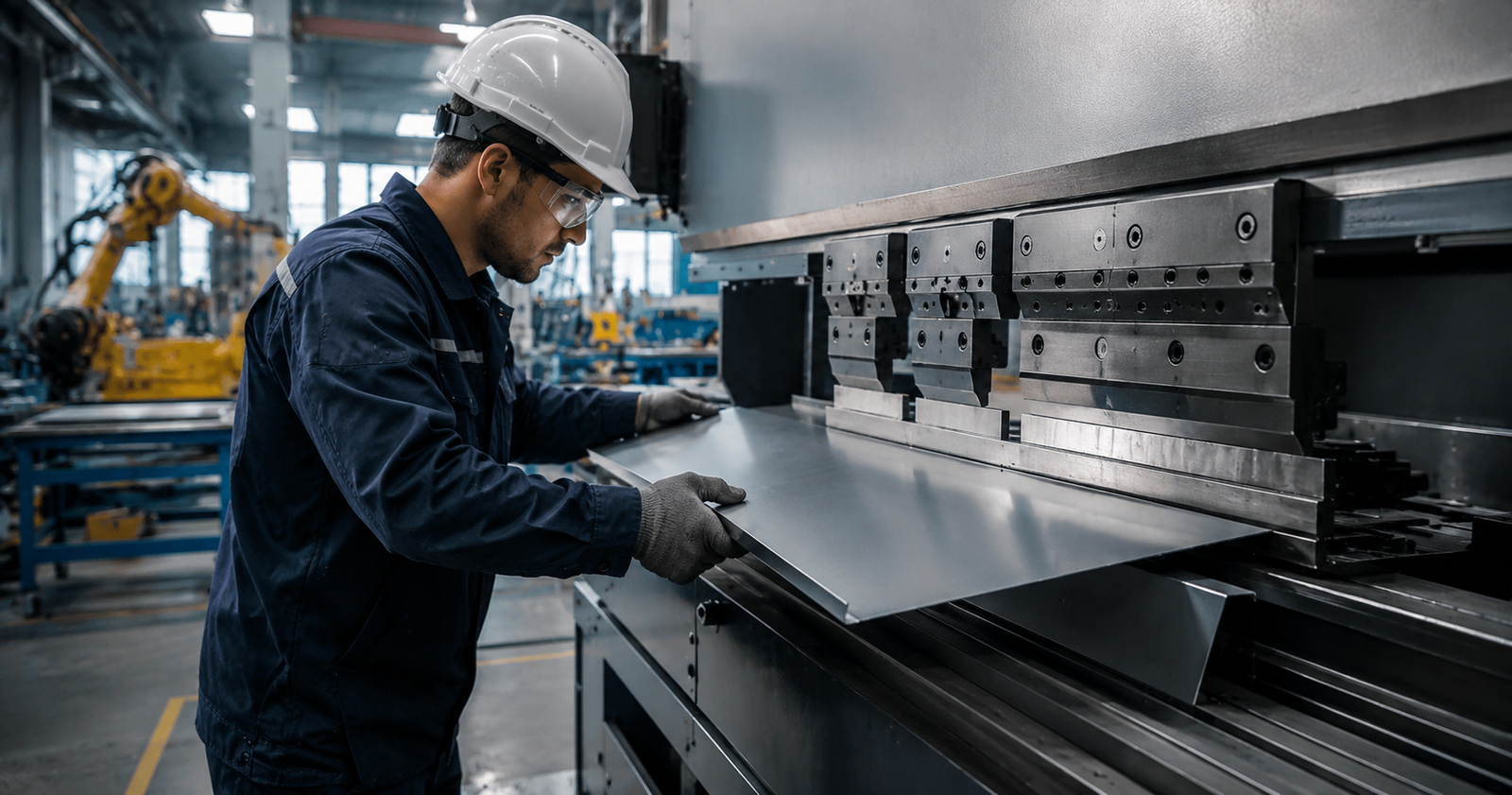
Precision plays a critical role in Industrial Steel Fabrication Solutions because even a small measurement error can affect the strength, alignment, and overall performance of a steel structure. Industrial projects require high accuracy during cutting, bending, welding, drilling, and assembly to ensure that every fabricated component fits perfectly during the on site installation process. Accurate fabrication not only improves structural stability but also reduces material wastage, project delays, and costly rework.
Modern fabrication industries use advanced machinery, CNC cutting systems, and digital engineering software to maintain precise dimensions throughout the fabrication workflow. Precision also supports better industrial welding standards by ensuring proper joint alignment and strong structural connections. In heavy industrial projects, accurate fabrication is essential for maintaining structural steel safety compliance and long-term durability under high load conditions.
Another major benefit of precision fabrication is improved project efficiency. When steel components are manufactured with exact measurements, installation becomes faster and smoother. This directly helps in maintaining fabrication project timelines and reducing labor costs. Combined with proper quality inspection in fabrication and certified engineering practices, precision fabrication ensures strong, safe, and reliable industrial steel structures for long-term performance.
Conclusion
Industrial Steel Fabrication Solutions represent the foundation of modern industrial construction, where engineering precision, skilled workmanship, and advanced technology come together to create strong and reliable steel structures. From initial planning and steel fabrication project costing to fabrication material selection, industrial welding standards, and structural steel safety compliance, every stage plays a critical role in ensuring project success.
A well-executed fabrication process not only improves structural strength but also enhances cost efficiency, safety, and long-term durability. Proper coordination between design, fabrication, quality inspection in fabrication, steel fabrication certifications, and heavy fabrication logistics ensures that projects are completed smoothly without delays or structural issues.
In today’s competitive construction industry, precision and efficiency are more important than ever. That is why modern fabrication methods, advanced tools, and strict engineering standards are widely used to achieve accurate results. Finally, the on site installation process brings all efforts together into a complete structure that is safe, stable, and ready for long-term industrial use.
In simple words, Industrial Steel Fabrication Solutions are not just about building steel structures—they are about building trust, strength, and long-term industrial reliability through smart engineering and disciplined execution.
FAQs – Industrial Steel Fabrication Solutions
What are Industrial Steel Fabrication Solutions?
Industrial Steel Fabrication Solutions refer to the complete process of designing, cutting, shaping, welding, and assembling steel structures for industrial and commercial use. It includes planning, steel fabrication project costing, material selection, welding, safety compliance, and final installation.
What is included in steel fabrication project costing?
Steel fabrication project costing includes material cost, labor charges, machinery usage, transportation, finishing, and installation expenses. It also considers design complexity, steel quality, and fabrication timelines to create an accurate project budget.
Why is fabrication material selection important?
Fabrication material selection is important because it directly affects the strength, durability, and lifespan of a structure. Choosing the right steel type like mild steel, carbon steel, or stainless steel ensures better performance and long-term reliability.
What are industrial welding standards in fabrication?
Industrial welding standards are rules and procedures that ensure strong and safe welding joints in steel structures. These standards help prevent defects like cracks or weak joints and maintain overall structural integrity.
How does structural steel safety compliance affect projects?
Structural steel safety compliance ensures that all fabrication work follows engineering safety rules and regulations. It helps protect workers, improves structural strength, and reduces risks of accidents or failures.