
For BG Engineering and Fabrication, Karachi
Turnkey steel fabrication means one team takes responsibility for the whole job site survey, engineering drawings, material selection, workshop fabrication, surface protection transport installation and handover. The client deals with one point of accountability instead of coordinating a designer a workshop, a transporter and an erection crew separately.
In Pakistan where coastal humidity heat and tight site access all affect how steel performs and how projects run, this integrated approach reduces the most common causes of delay and rework mismatched drawings, on-site cutting and gaps between who fabricated a part and who fitted it.
What Turnkey Steel Fabrication Actually Means
The word is used loosely, so it helps to define it. A genuine turnkey steel or full cycle turnkey steel solution covers four things under one contract and one project owner:
- Engineering and design: Measured drawings, fabrication details and load considerations.
- Fabrication: Cutting, forming, welding and finishing in a controlled workshop.
- Installation: Delivery to site and fitting by the same team or under the same supervision.
- Handover: Final inspection, snag correction and a working, safe, finished structure.
If a provider only fabricates and leaves installation to you, that is workshop supply, not turnkey steel delivery. The distinction matters when you compare quotations, because a lower price often excludes the stages where problems appear.
The Fabrication-to-Installation Workflow, Stage by Stage
A well-run fabrication to erection workflow follows a fixed sequence. Each stage hands clean information to the next one.
1. Site survey and scope definition
Everything begins with measurements taken on site, not from architectural drawings alone. Finished floor levels, wall tolerances, openings, existing services and access routes for materials all decide what can actually be built and installed. Scope is written down at this stage: dimensions, steel grade, finish, load use and completion date.
2. Engineering and fabrication drawings
Shop drawings convert the design intent into cut lists, connection details and weld specifications. For structures that carry people or loads, such as staircases, emergency stairs, walkways, mezzanines and warehouse sheds, the sizing of members and connections should be checked against the intended use. Approvals from the relevant building authority may be required depending on the structure and location, so confirm this early rather than after fabrication.
3. Material selection and procurement
Carbon steel, mild steel and stainless steel behave differently in Pakistani conditions. Carbon steel is strong and economical but needs a proper protective system. Stainless suits visible, humid or coastal applications but costs more. Thickness is chosen for the job, not for the quote. For example, laser-cut separator panels and front elevation screens use thinner sheet than load-bearing stair stringers.
4. Workshop fabrication
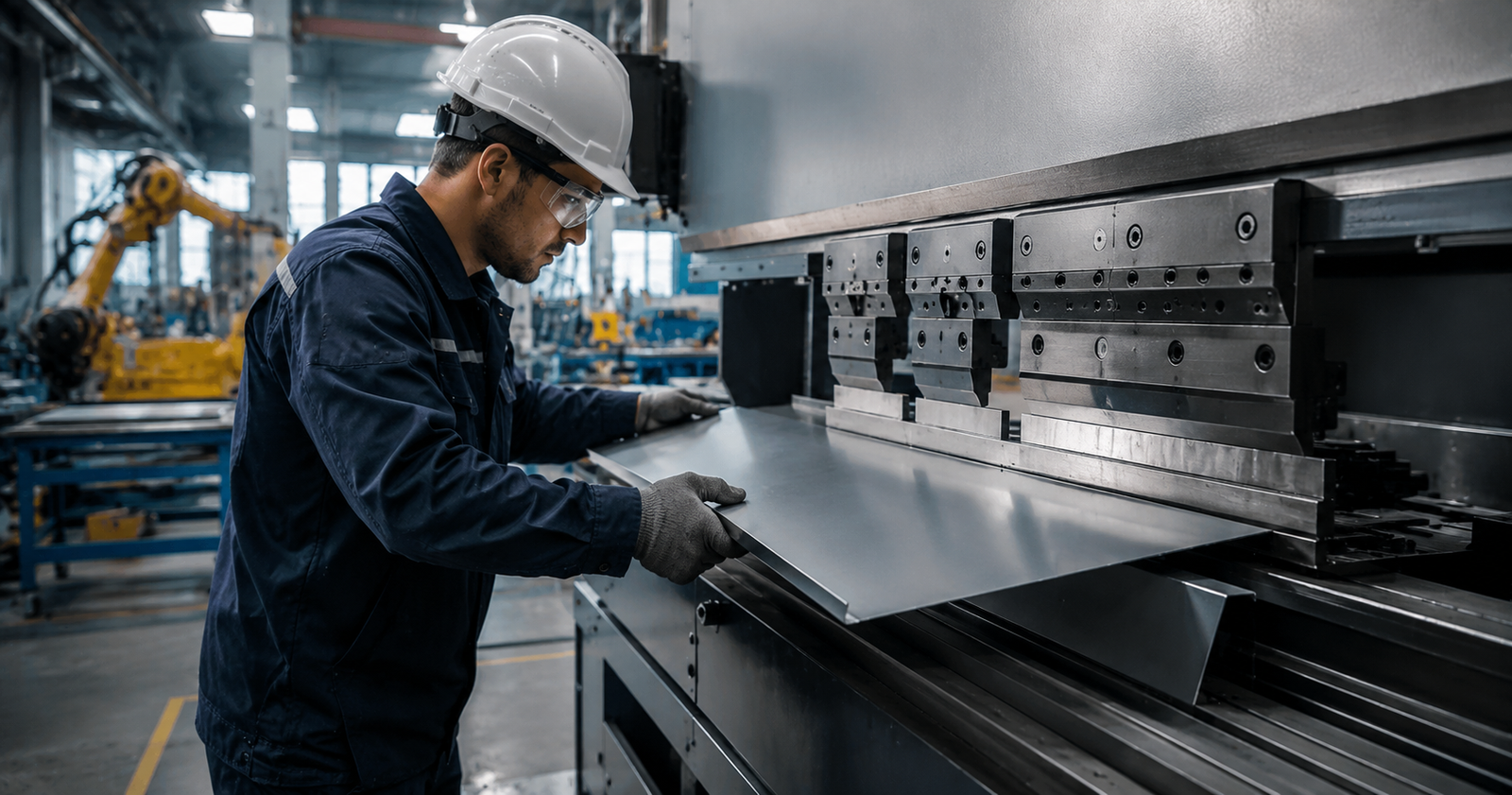
Cutting, bending, welding and assembly are done in the workshop where conditions are controlled and quality is easier to check. Doing as much as possible here is the core advantage of integrated delivery: parts arrive at site already fitted, matched and marked, so installation is assembly rather than improvisation. Precision parts cutting, including laser cutting, keeps tolerances tight and reduces fit-up problems.
5. Surface preparation and protective finishing
Steel failing early is usually a finishing problem, not a steel problem. Surface preparation, primer, paint, powder coating or galvanizing should be matched to where the steel will live. This is especially important in Karachi, where salt-laden air accelerates corrosion on exposed metalwork.
6. Logistics and site delivery
Large or heavy assemblies are often split into transportable sections and joined on site. Planning lifts, access, parking and working hours in advance avoids stoppages, particularly in dense residential and commercial areas.
7. Installation and erection
This is where integrated project execution pays off. The people who understand the drawings and how the parts were built are the same people fitting them, so small mismatches are resolved on the spot instead of becoming disputes between contractors. It matters most on precision installs such as staircase and stair railing systems and glass bridges, where a few millimetres decide whether a part fits.
8. Inspection and handover
Before handover, welds, fixings, alignment, finishes and safety features such as railings and anti-slip treads are inspected. A short snag list is closed out and the client signs off against the original scope.
Why Integrated Delivery Beats Splitting the Job
When design, fabrication and installation sit with different parties, responsibility becomes unclear. If a staircase does not fit the opening, the fabricator blames the drawings, the designer blames the site, and the client absorbs the delay.
A coordinated fabrication system with one contract removes that gap. The practical benefits are:
- Single accountability: One party owns the result.
- Fewer site modifications: Parts are made to surveyed dimensions.
- Better scheduling: Fabrication and site readiness are planned together.
- Cleaner communication: One set of drawings, one change process.
- Consistent quality: The same standards apply from the cutting table to the final fixing.
Project Management and Execution What to Expect
Good project management execution on a fabrication job is not complicated, but it is disciplined.
A managed construction pipeline typically includes:
- A written scope and a dated programme with clear milestones.
- Coordination with civil, electrical, glazing and finishing trades so steelwork goes in at the right moment.
- A change-control step: any variation in size, finish or scope is priced and agreed before work proceeds.
- Regular progress updates, ideally with workshop and site photos.
- A defined handover and a point of contact after completion.
If a provider cannot describe how they handle changes and schedule slippage, they probably do not have a process for it.
Projects That Suit Turnkey Steel Delivery
Integrated delivery is most valuable where steel must be accurate, safe and fitted to an existing building.
Typical examples include:
- Staircases, stair railings and emergency stairs
- Warehouse sheds for commercial and industrial use
- Main gates and boundary metalwork
- Glass bridges and skylight frames
- Rooftop structures and terrace and balcony railings
- Front elevation screens and separator panels
Single small components, such as one-off precision parts cutting, may not need a full turnkey structure, but the same workshop discipline applies.
Pakistan Specific Factors That Shape Steel Projects
- Coastal corrosion: In Karachi, salt in the air shortens the life of poorly protected steel, especially on exposed items like main gates and terrace and balcony railings. Specify the coating system in writing.
- Heat and expansion: Long steel runs, skylight frames and rooftop structures need allowance for thermal movement.
- Access constraints: Narrow streets and occupied buildings affect delivery size, lifting method and working hours.
- Regulatory approvals: Structural and building-control requirements vary by city and building type. Check what applies before fabrication starts.
- Material variation: Steel quality and sheet thickness vary in the local market, so ask what grade and thickness is quoted.
How to Evaluate a Turnkey Steel Provider
Before signing ask:
- Does the quotation cover design, fabrication, transport and installation, or only some of them?
- What steel grade, thickness and finish are specified?
- Who is responsible for site measurements?
- How are changes, delays and defects handled?
- Can you see completed work similar to your project?
- Who will be on site, and who is your single point of contact?
- What is the handover process, and what follow-up support is offered?
Detailed specific answers are a stronger signal than a low price.
What Affects Cost and Timeline
Cost depends on turnkey steel type and thickness, total weight and complexity, finish system, site access, installation height or difficulty, and any approvals. Timeline depends on drawing approval, material availability, workshop capacity, finishing and curing time, and site readiness. Fixed prices and dates are only meaningful after a site survey, so treat any quotation given without one with caution.
Working with BG Engineering and Fabrication
BG Engineering and Fabrication is a Karachi-based engineering and fabrication company offering steel fabrication across residential, commercial and industrial projects, with laser cutting and engraving on materials such as 8mm carbon turnkey steel and 5mm stainless turnkey steel. Its service range runs from stairs and railings to gates, sheds, glass bridges and rooftop structures. To discuss a project, use the contact page or review the services overview.