
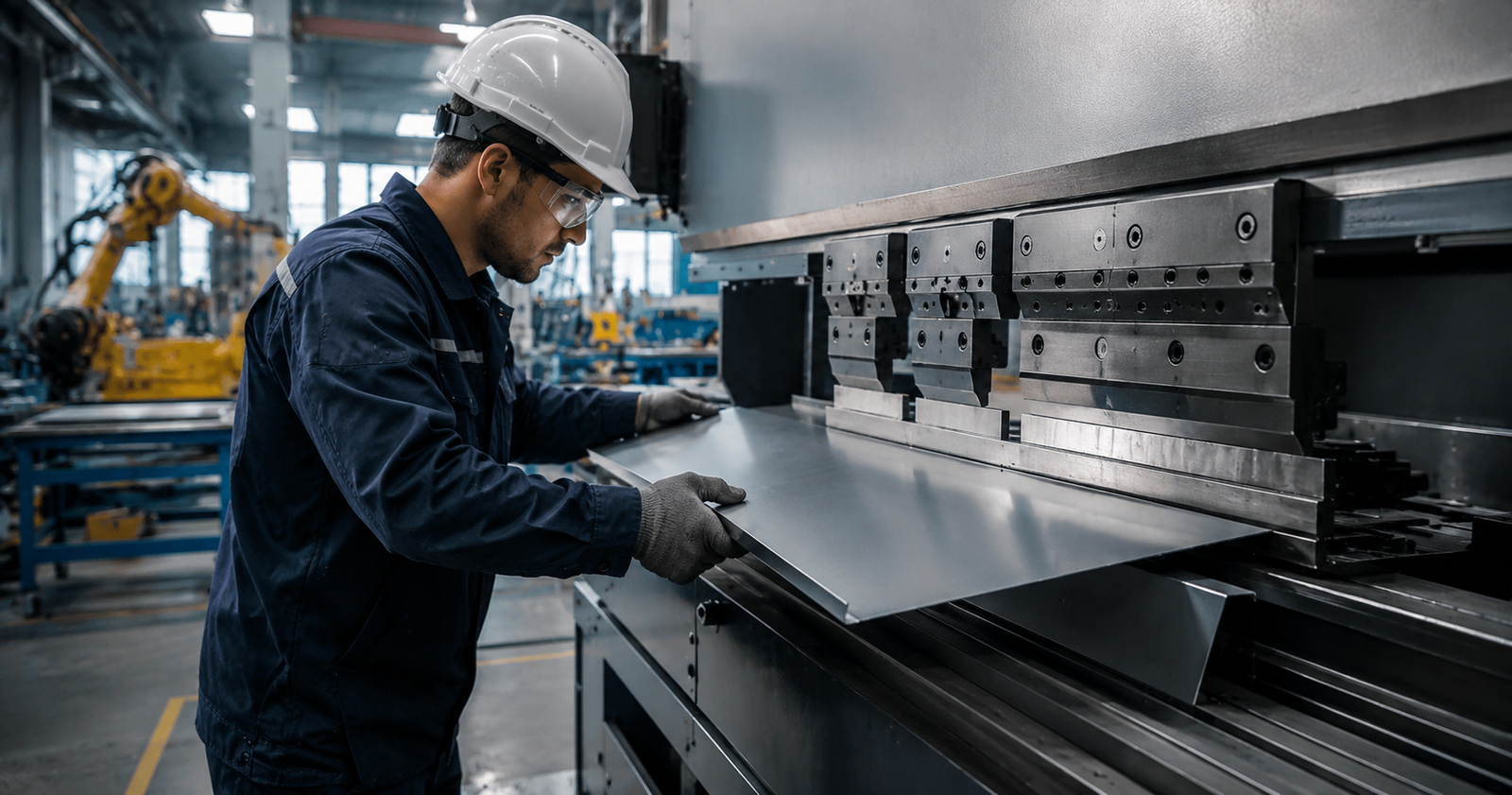
Karachi runs on steel. Textile plants, food processing units, pharma facilities, ports, construction sites almost every industrial operation in the city eventually needs a metal part that doesn’t exist off the shelf. That’s where custom metal fabrication services in Pakistan come in: taking a drawing, a rough sketch, or even just a problem, and turning it into a working piece of steel.
If you’ve searched for bespoke metal solutions or made-to-order steel work in Karachi, you’ve probably noticed the market is crowded. Dozens of workshops claim precision, quality, and reliability. Almost none of them explain what actually separates a good fabricator from one that will cost you a second round of rework.
Who Actually Needs Custom Fabrication in Karachi
Before getting into the process, it helps to know who this service is really for. Three groups make up most of the demand in the city:
Industrial plant owners in sectors like textiles, pharma, and food processing, who need tailored industrial components brackets, platforms, tanks, conveyor parts that match equipment nobody else in the country uses in exactly that configuration.
Construction and real estate developers, who need structural steel, staircases, railings, and gates built to architectural drawings rather than pulled from a catalogue.
Product and hardware businesses who need small-batch precision fabrication projects run 50 or 500 identical parts, not one-off pieces, built to a tolerance they can actually rely on.
Each of these buyers is searching for something slightly different, even when the keyword looks the same. A plant manager typing “custom metal fabrication services Pakistan” usually wants capability and turnaround time. An architect typing “engineered metal products” wants portfolio proof. A product business wants pricing at volume. Good fabrication content and a good fabricator should speak to all three without making any of them scroll past irrelevant information to find their answer.
What “Custom” Actually Means Here
A lot of workshops in Karachi use “custom” loosely. It usually means one of three things, and it’s worth knowing which one you’re paying for.
- Made to specification metal work: means the workshop builds exactly to your drawing, tolerances, and material spec, with no design input from their side. This is what most industrial clients need you already know what you want; you need someone who can execute it without deviation.
- Client-specific fabrication: goes a step further. The workshop’s engineers review your drawing, flag anything that won’t hold up structurally or won’t survive Karachi’s heat and humidity, and adjust before cutting starts. This is where a lot of rework gets avoided.
- Engineered custom assemblies: is the most involved tier multiple fabricated parts, often from different materials, brought together into one functioning unit. Conveyor systems, custom racking, and multi-part machine housings fall here. This is also where the gap between an average shop and a genuinely skilled one shows up fastest, because assembly tolerance stacks up: a small error in one part becomes a big one by the time three parts are welded together.
Knowing which tier your project needs is the first real filter when picking a fabricator. It tells you whether to ask for a quote or ask for a design review.
What to Check Before You Commit to a Workshop
Karachi’s fabrication market includes long-established heavy steel fabricators, mid-size workshops built around CNC laser cutting, and smaller operations that specialize in interior or architectural metalwork. None of these is automatically the “best”; the right fit depends on your project.
A few things worth checking regardless of which type you approach:
Can they take a CAD or SolidWorks file directly, or do they need everything converted to paper drawings first? This affects both turnaround and the odds of a measurement getting lost in translation.
Do they do in-house finishing shot blasting, galvanizing, powder coating or does the part leave the shop unfinished and go to a third party? Every handoff between vendors adds time and a chance for damage in transit.
What’s their real turnaround for precision engineered parts, not the number quoted on the phone? Ten to twenty-one working days is typical for standard structural work in Karachi; anything promised faster for a complex assembly is worth double-checking.
Have they handled your specific material before? Stainless steel, mild steel, and aluminum behave differently under welding heat, and a shop that’s mostly done mild steel structural work may not have the calibration for stainless finish work.

Where Bespoke Steel Manufacturing Is Heading in Karachi
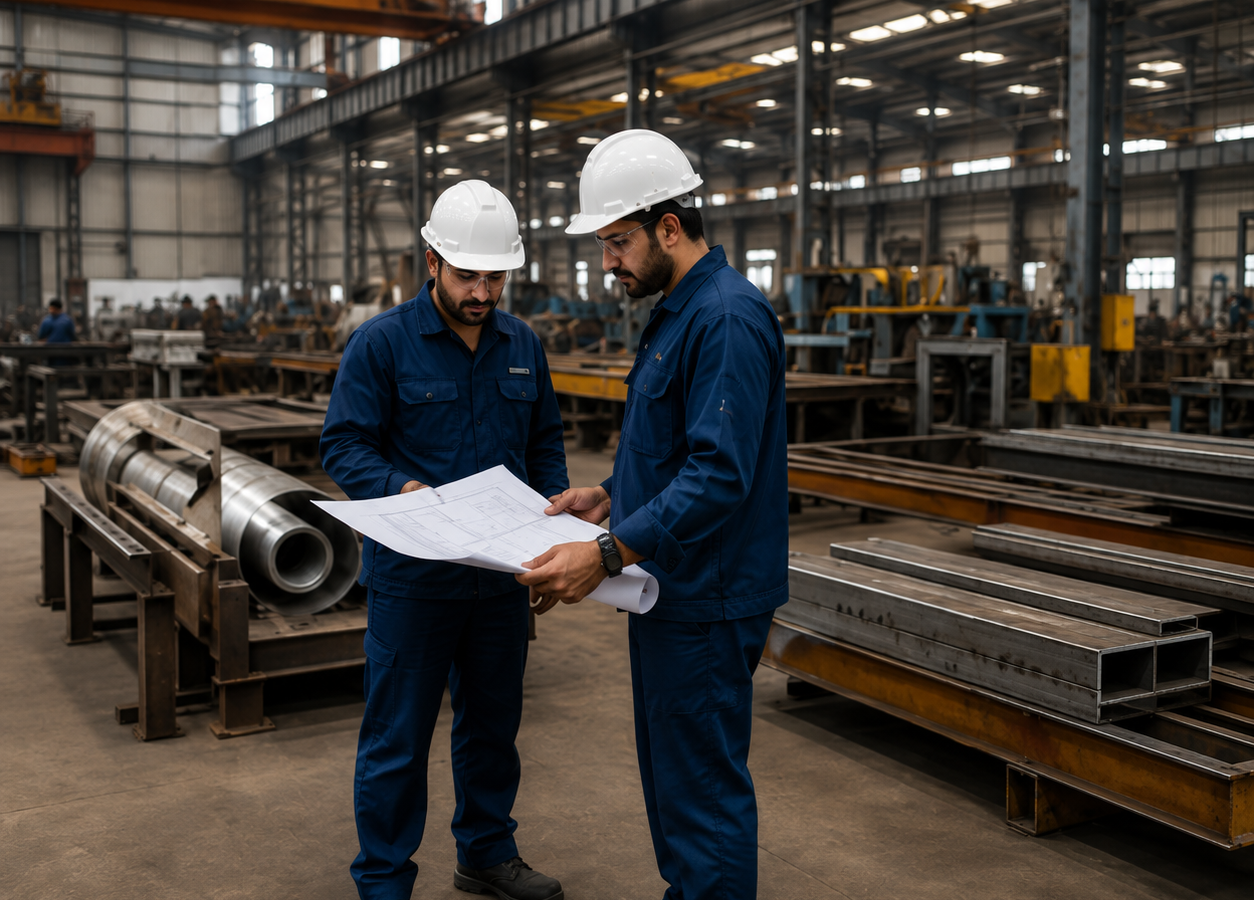
Two shifts are changing how fabrication gets bought in the city. First, more clients are sending CAD files instead of hand-drawn sketches, which is pushing workshops without digital design capability out of the higher-value, tighter-tolerance jobs. Second, clients are increasingly asking for the finishing and installation to be handled by the same workshop that fabricates the part, rather than coordinating three separate vendors for cutting, coating, and fitting.
For a business evaluating fabricators right now, that second point matters more than most marketing pages let on. A workshop that can fabricate, finish, and install under one roof isn’t just more convenient it removes the finger-pointing that happens when a part fails and three different vendors each blame the other’s stage of the process.
Getting a Quote That Means Something
The fastest way to get an accurate quote for custom metal fabrication in Pakistan is to send whatever you already have: a CAD file, a photo of the existing part, even a rough sketch with dimensions along with the material spec and quantity. Workshops that ask clarifying questions before quoting, rather than giving a number off a two-line description, are usually the ones that won’t surprise you with a change order halfway through the job.
If you’re comparing options in Karachi, ask each one for a reference project close to your industry, not just their general portfolio. A workshop that’s fabricated railings and gates for years may not be the right choice for a pharma-grade stainless assembly, even if the metalwork looks equally polished in photos.
Frequently Asked Questions
What’s the typical cost of custom metal fabrication in Karachi?
Cost depends on material, complexity, and finishing, so most workshops won’t quote a flat rate. Sending a drawing or reference photo gets a far more accurate number than a general estimate.
How long does made-to-order steel work usually take?
Standard structural fabrication typically runs ten to twenty-one working days in Karachi. Multi-part assemblies or projects needing custom finishing usually take longer.
Can a workshop fabricate from a CAD file directly?
Established fabricators with CNC capability can usually work directly from CAD or SolidWorks files. Smaller workshops may still require converted paper drawings, which can add time.
What materials are most commonly used for industrial fabrication in Pakistan?
Mild steel and stainless steel cover most industrial and structural work, with aluminum used for lighter or corrosion-sensitive components.
Do fabrication workshops in Karachi handle installation as well?
Many do, though it’s worth confirming upfront rather than assuming. Workshops that fabricate, finish, and install under one roof usually mean fewer handoffs and less risk of a part being damaged between vendors.
What information should I send to get an accurate quote?
A CAD file or dimensioned drawing, the material spec, and the quantity needed. If you don’t have a formal drawing, a clear photo with measurements works too the more detail upfront, the fewer surprises once cutting starts.