
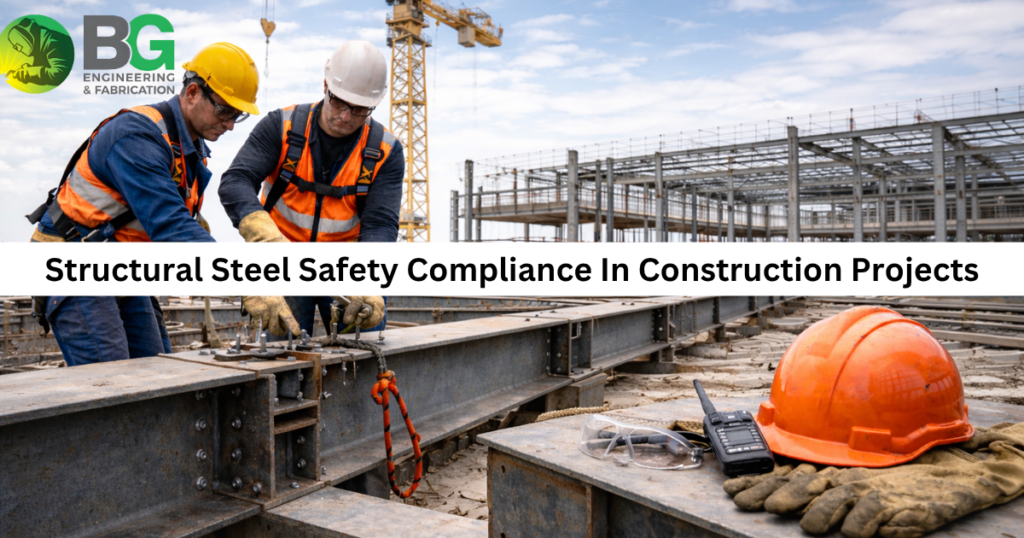
Structural Steel Safety Compliance in Construction Projects
What is structural steel safety compliance in construction?
Structural steel safety compliance refers to following approved construction safety standards, engineering regulations, and fabrication guidelines during the manufacturing and installation of steel structures.
Why is safety compliance important in structural steel fabrication?
Safety compliance ensures that steel fabrication processes, welding operations, and structural assembly are performed safely, reducing workplace accidents and improving project reliability.
What safety standards apply to structural steel fabrication?
Structural steel fabrication usually follows welding standards, material quality standards, structural engineering guidelines, and construction safety regulations to ensure safe and durable structures.
What PPE is required for structural steel workers?
Workers involved in steel fabrication, welding, and cutting operations must wear PPE such as safety helmets, gloves, welding masks, protective glasses, and steel-toe boots.
How do companies maintain structural steel safety compliance?
Companies maintain compliance by implementing workplace safety protocols, worker training programs, equipment inspections, and quality control checks throughout the fabrication process.
What risks are involved in structural steel fabrication?
Common risks include welding hazards, falling objects, equipment accidents, and improper steel handling, which is why strict safety procedures must be followed.
How does quality control support steel safety compliance?
Quality control ensures that steel components, weld joints, and structural connections meet engineering specifications and safety requirements before installation.
What role does structural engineering play in safety compliance?
Structural engineers perform load calculations, structural analysis, and design verification to ensure the steel structure can safely support weight and environmental forces.
What are the common safety practices in steel construction sites?
Common practices include proper lifting procedures, safe welding operations, fall protection systems, and equipment safety checks.
How does proper training improve steel fabrication safety?
Welding standards establish strict quality requirements that fabrication companies must follow. This includes proper joint preparation, weld penetration, inspection procedures, and post-weld testing.
Following these standards helps ensure consistent quality in industrial steel fabrication and engineering projects.
What inspections are required in structural steel projects?
Structural steel projects often require material inspections, weld inspections, load testing, and final structural safety checks before installation.
How can modern technology improve steel fabrication safety?
Modern technology such as CAD design tools, automated cutting machines, and advanced welding equipment improves accuracy and reduces human error in fabrication.
If you want a more detailed understanding of fabrication budgets, material choices, and welding requirements, you can explore our related guides below:Industrial Steel Fabrication Solutions Complete Guide for Modern Industry