
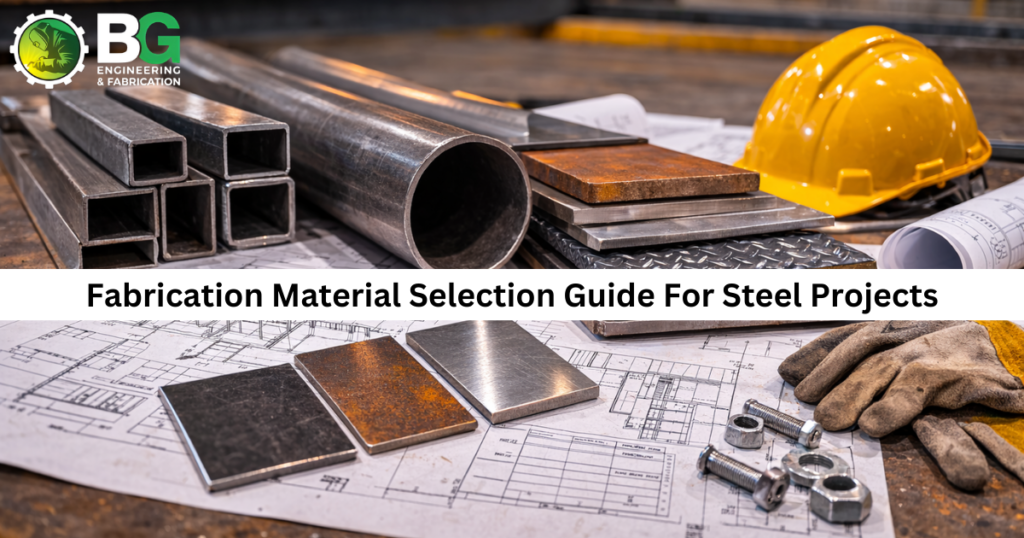
Fabrication Material Selection Guide for Steel Fabrication Projects
What is fabrication material selection in steel fabrication projects?
Fabrication material selection is the process of choosing the right metal or steel grade for a fabrication project. It considers strength, durability, corrosion resistance, load capacity, and project requirements to ensure structural safety and long-term performance.
Why is material selection important in steel fabrication?
Material selection directly affects structural strength, fabrication cost, durability, and maintenance requirements. Choosing the correct steel material ensures efficient fabrication processes and improves the reliability of fabricated structures.
What factors influence steel fabrication material selection?
Several factors influence fabrication material selection, including load requirements, environmental conditions, corrosion resistance, weldability, fabrication cost, and project design specifications.
Which types of steel are commonly used in industrial fabrication?
Common materials used in steel fabrication include structural steel, carbon steel, stainless steel, and alloy steel. Each type offers different levels of strength, corrosion resistance, and durability depending on project needs.
How does material selection impact steel fabrication project costing?
Material selection significantly affects steel fabrication project costing because different steel grades vary in price, processing requirements, and fabrication complexity. High-grade materials may increase initial cost but improve durability and reduce maintenance expenses.
What role does corrosion resistance play in fabrication material selection?
Corrosion resistance is crucial when selecting materials for outdoor or industrial environments. Materials such as stainless steel or galvanized steel are often chosen to prevent rust and extend the lifespan of fabricated structures.
How do engineers determine the best material for fabrication?
Engineers evaluate structural load capacity, design requirements, fabrication techniques, environmental conditions, and budget constraints before selecting the most suitable steel material for fabrication.
What is the difference between carbon steel and stainless steel in fabrication?
Carbon steel is widely used in fabrication because of its strength and cost-effectiveness, while stainless steel offers better corrosion resistance and durability, making it suitable for harsh environments and industrial applications.
Can improper material selection affect fabrication quality?
Yes, poor material selection can lead to structural failure, welding difficulties, corrosion problems, and increased maintenance costs. Proper material selection ensures fabrication quality and long-term performance.
How does fabrication design affect material selection?
Fabrication design determines the required material thickness, strength, and weldability. Complex fabrication designs may require specific steel grades to ensure structural integrity and manufacturability.
What role does weldability play in steel fabrication material selection?
Weldability determines how easily steel materials can be joined during fabrication. Materials with better weldability improve fabrication efficiency and reduce production costs.
How can businesses optimize steel fabrication material selection?
Businesses can optimize material selection by consulting fabrication engineers, analyzing project requirements, selecting appropriate steel grades, and balancing durability with fabrication project cost efficiency.
If you want a more detailed guide about fabrication budgets and calculations, read our complete article on. Industrial Steel Fabrication Solutions Complete Guide for Modern Industry